Biography
Long Biography
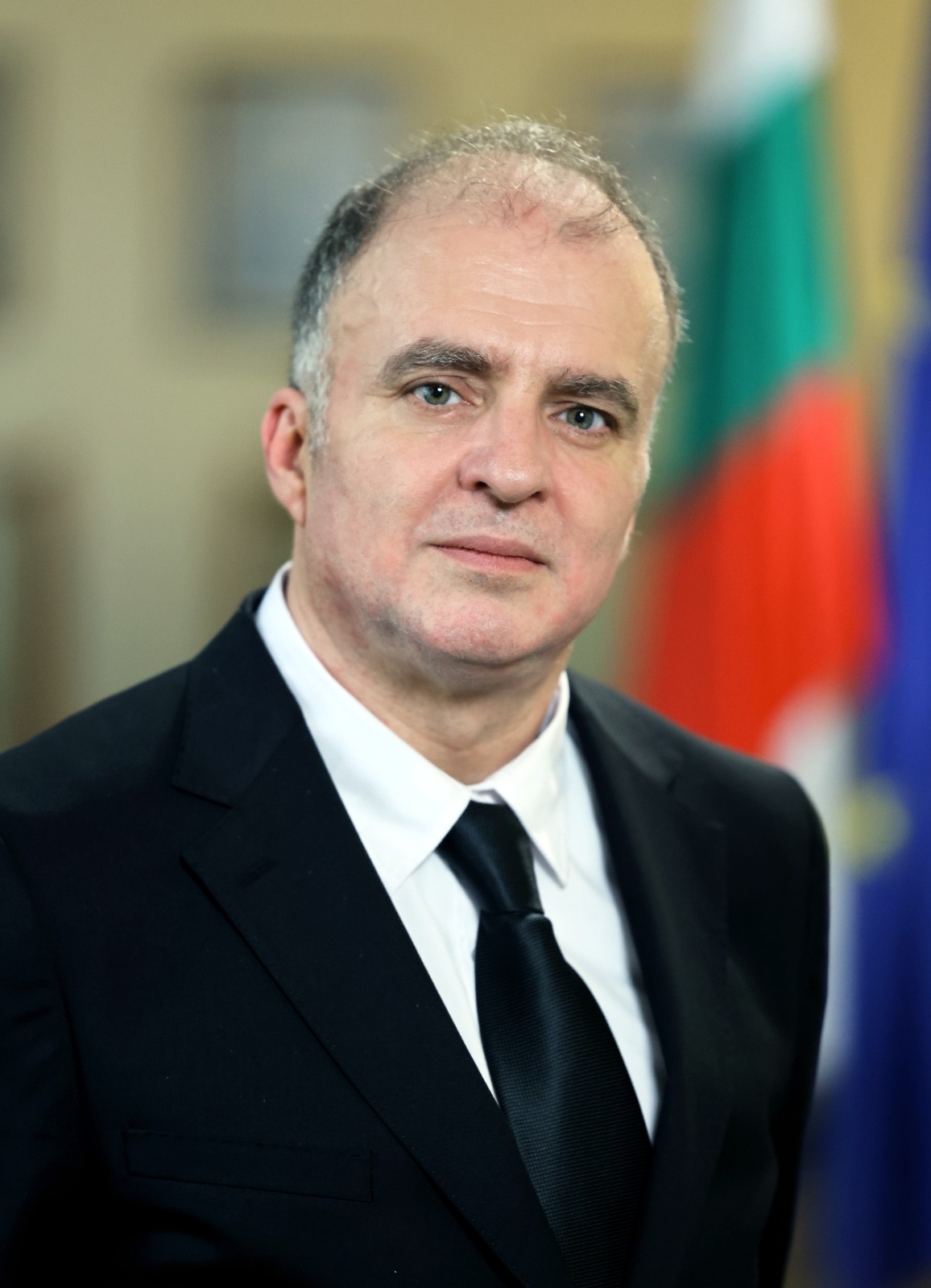
Nayden Todorov is one of the prominent European conductors of his generation, an artist whose career has developed across the symphonic, operatic and ballet repertoires while also embracing recording, film music, crossover projects, education, cultural management and public service. Born on 8 April 1974 in Plovdiv, he has conducted throughout Europe, Asia, Africa and the Americas, appeared in many of the world’s leading concert halls and opera houses and worked with an exceptional range of internationally distinguished singers and instrumentalists. Since 2017 he has been Artistic Director of the Sofia Philharmonic, shaping one of the most internationally visible periods in the institution’s modern history.
His artistic profile is defined by breadth rather than by a single specialism. Todorov’s repertoire extends from the central Austro-German and Russian symphonic canon to Italian, French, German and Slavic opera; from ballet and contemporary music to Bulgarian repertoire, large-scale film-music productions and projects that bring classical orchestral culture into dialogue with rock, pop and musical theatre. Alongside the podium, he has built a substantial legacy as a recording artist, educator, author, television presenter and cultural administrator. He has also served three times as caretaker Minister of Culture of the Republic of Bulgaria.
Todorov’s work has received wide national and international recognition. His distinctions include multiple Crystal Lyre awards, the Golden Stave of the Union of Bulgarian Composers, the Golden Book award, the Emil Chakarov Prize, the Plovdiv Award, the Bogdan Bogdanov Prize for the Humanities, the Sofia Municipality Prize for Culture and the title of Honorary Citizen of Ruse. He has twice been voted “Musician of the Year” by the listeners of Bulgarian National Radio. Internationally, he has received the Aquila d’Oro Award in Italy, the Romanian Order of Cultural Merit in the rank of Grand Officer and the French Order of Arts and Letters in the rank of Chevalier.
Early Years and Musical Formation
Music entered Todorov’s life at an exceptionally early age. He began piano lessons at five, started composing at six and made his conducting debut at sixteen. At the Dobrin Petkov National School of Music in Plovdiv he studied piano with Darina Kantardzhieva and trumpet with Lilia Kovacheva-Toporcheva, while also pursuing composition with Svetlozar Bratanov and conducting with Krastju Marev, the long-serving principal conductor of the Plovdiv Opera. He graduated with distinction in 1993. Among the formative influences of these years were the composer Alexander Vladigerov in Bulgaria and, later, Professor Karl Österreicher in Vienna.
As a school student he was already active both as a performer and as an organiser. In 1990 he founded the Plovdiv Youth Orchestra, which became an important laboratory for his development as a conductor. For more than a decade he led the ensemble in concerts throughout Bulgaria and on tours to Austria, the Czech Republic, Slovakia and Germany, and made several CD recordings with it. His student years also brought awards at national and international competitions, including the Svetoslav Obretenov competitions, the Pancho Vladigerov competition, the International Competition for Czech Music and the Dimitar Nenov competition for pianists. He also received the Zdravko Manolov Prize and an award from the Slovak Music Fund.
Todorov made his professional conducting debut in 1993 with the Vratsa Philharmonic Orchestra at the invitation of its principal conductor, Vesselin Baytchev. In 1995 he joined the orchestra in his first permanent professional appointment, and subsequently became principal conductor of the Vidin Philharmonic Orchestra. These early positions gave him intensive experience with the core orchestral repertoire and with the practical demands of building programmes, rehearsing under limited conditions and sustaining the identity of a regional symphonic institution.
The decisive phase of his formal training took place at the University of Music and Performing Arts in Vienna. There he studied orchestral conducting with Professor Uroš Lajovic, choral conducting with Professor Günther Theuring, opera conducting with Professor Konrad Leitner and musical leadership with Peter Richter. During his studies he held scholarships from the Borghese Foundation, the Saints Cyril and Methodius Foundation, Rotary Club Vienna, Rotary Club Jerusalem and the Georg Wächter Foundation in Switzerland. The combination of orchestral, choral and operatic disciplines established the broad technical foundation that would later allow him to move freely between concert, opera and ballet.
In 1996–1997 he was invited by the Leonard Bernstein Foundation in Jerusalem to continue his advanced studies in Israel. At the Rubin Academy of Music and Dance he worked with Mendi Rodan, one of the leading figures in Israeli musical life. At the same time, Todorov played trumpet in the Jerusalem Symphony Orchestra. The experience of participating from within a professional orchestra brought him into direct contact with conductors and composers including David Shallon, Sergiu Comissiona, Lorin Maazel and Krzysztof Penderecki, and deepened his understanding of the relationship between a conductor’s gesture and the musicians who must transform it into sound.
A separate encounter in Los Angeles in 1996 was to have a lasting effect on his artistic life. His acquaintance with the celebrated Hollywood composer Jerry Goldsmith opened a path into the world of film music, a field that Todorov would later cultivate through major symphonic productions and long-running concert series. In 1997 he founded the international Thracia Summer festival in his native Plovdiv. The following year, selected from more than 150 candidates, he became permanent conductor of the North Israel Symphony Orchestra in Haifa, his first long-term appointment outside Bulgaria. In the same period he was invited to serve as Artistic Adviser to the Los Angeles International Chamber Music Festival.
His later academic qualifications complemented this practical international formation. At New Bulgarian University he completed a bachelor’s degree in piano, a master’s degree in conducting and a further degree in cultural management. In 2024 he was awarded a doctorate for his research on the development of Bulgarian orchestras, bringing together the perspective of a practising conductor, an institutional leader and a scholar of musical structures.
Plovdiv: From Young Conductor to Music Director
In 2000, at the age of twenty-six, Todorov was appointed Music Director of the Plovdiv Opera and Philharmonic Orchestra. At the time, he was the youngest conductor in Bulgaria to occupy such a position. His appointment placed him at the head of a complex institution that combined symphonic and operatic activity, and required him to think simultaneously as interpreter, planner, recording musician and manager.
He made his operatic debut in Plovdiv in early 2001 with Puccini’s Tosca. Under his musical direction the company developed an active touring profile, presenting productions in the Netherlands, Germany and the United Kingdom. Among the most ambitious projects was Dario Fo’s celebrated staging of Rossini’s The Barber of Seville, a production whose theatrical imagination and international reach reflected the scale of the institution’s ambitions during this period.
The Ancient Theatre in Plovdiv became the setting for a series of high-profile summer concerts and opera performances under Todorov’s baton. He worked there with major Bulgarian and international singers including Ghena Dimitrova, Nikola Ghiuselev, Kaludi Kaludov, Stefka Evstatieva, Hui He and Kamen Chanev. These large open-air productions strengthened his experience in shaping performances on an architectural scale, balancing vocal and orchestral forces in spaces very different from the conventional opera house.
His recording work expanded rapidly in parallel. With the Plovdiv Philharmonic Orchestra he recorded the complete symphonies of the Danish composer Louis Glass for the Danacord label, a project that demanded both stylistic consistency and a long-term view of a composer’s symphonic development. He also made more than one hundred recordings for the American company Music Minus One, laying the foundations of a discography that would eventually encompass more than 130 releases. His concert with the Plovdiv Philharmonic and Jon Lord later brought him the Plovdiv Award and anticipated a creative relationship that would become one of his most widely known crossover collaborations.
Sofia Opera, Burgas and the Expansion of an Operatic Career
While leading the Plovdiv institution, Todorov established an increasingly important presence in Sofia. At the invitation of composer Viktor Chuchkov, he appeared at Bulgaria Hall in 2000. In 2001 he conducted the Sofia Opera Orchestra at the concluding concert of the first masterclass of the great Bulgarian soprano Raina Kabaivanska. This was the beginning of an artistic partnership that continued for decades. Todorov subsequently conducted the orchestras of both the Sofia Opera and the Sofia Philharmonic in concerts associated with Kabaivanska’s masterclasses, as well as in appearances in Bulgaria, Italy and Spain. Through this work he collaborated with singers who would go on to major international careers, among them Maria Agresta, Andrea Carè, Vittoria Yeo and Marily Santoro.
His official operatic debut at the Sofia Opera came in 2002 with Verdi’s La traviata, with Darina Takova in the title role. Several months later he conducted the premiere of Gounod’s Faust, with Tsvetana Bandalovska, Julian Konstantinov, Adam Zdunikowski and Stefka Mineva; the production received the Sofia Municipality award. In 2003 he made his ballet debut at the theatre with Prokofiev’s Romeo and Juliet. These engagements confirmed the range of his stage work at an early stage of his career: Italian and French opera, the Russian ballet tradition and the close coordination of singers, dancers, chorus and orchestra.
With the Sofia Opera Orchestra he recorded Ludwig Minkus’s ballet Don Quixote and Rachmaninoff’s operas Aleko, The Miserly Knight and Francesca da Rimini for Naxos. He also appeared in concerts and recording projects with singers including Anna Tomowa-Sintow, Alexandrina Miltcheva, Rumen Doikov and Orlin Anastasov. Following a successful Sofia production of Carmen with Laura Brioli, Anna Cuo and Ivan Momirov, he made his debut with the company at the Solothurn Opera Festival in Switzerland in 2005, conducting Faust. That appearance opened a sustained relationship with the festival, later continued through guest performances by the Ruse Opera.
In 2006, at the Sofia Opera, Todorov began a long and productive collaboration with the Swiss stage director Gian Gianotti in Rossini’s The Italian Girl in Algiers. Their work reflected Todorov’s continuing interest in opera as a total theatrical form, in which musical architecture and stage direction must develop as parts of a single dramatic argument.
Between 2003 and 2005, at the invitation of the distinguished Bulgarian conductor Mihail Angelov, Todorov served as Artistic Director of the Burgas Opera and Philharmonic Society. He later accepted, again at Angelov’s invitation, the artistic leadership of the Danube Sounds Choir in Ruse. These appointments added choral and institutional responsibilities to a career already divided between symphonic and operatic work.
International Productions and Wichita Grand Opera
From 2004 onward Todorov became closely associated with the touring production The Night of the Five Tenors. He conducted the project repeatedly in many of Germany’s leading venues, including the Berliner Philharmonie, the Herkulessaal in Munich, the Laeiszhalle in Hamburg, the Liederhalle in Stuttgart, the Alte Oper Frankfurt and the Meistersingerhalle in Nuremberg. The long-running series required the precision of operatic accompaniment, the pacing of a theatrical gala and the flexibility to sustain a production across numerous cities and changing acoustic environments.
In 2005 he began a collaboration with Wichita Grand Opera in the United States. Over the following years he conducted Verdi’s Aida, Puccini’s Tosca and Rossini’s William Tell, working with artists including Samuel Ramey, Annalisa Rospigliosi, Lucas Meachem, Michael Spyres and the Bulgarian soprano Tsvetelina Vassileva. These productions extended his operatic activity beyond Europe and placed him within the American festival and regional-opera tradition, where large-scale repertory works are often prepared under concentrated rehearsal conditions.
The Ruse Years: Opera, Institution Building and International Touring
The period from 2005 to 2017, during which Todorov served as Director of the State Opera in Ruse, became one of the central chapters of his career. The position united artistic planning, institutional leadership, touring strategy and daily administrative responsibility. Under his direction the company maintained an exceptionally active international profile, presenting opera productions in Austria, Switzerland, Germany, Italy, Spain, Portugal, France, Belgium, the Netherlands and Luxembourg. The ballet company toured in Italy, South Korea and Dubai, while additional engagements took the institution to other European and Middle Eastern destinations.
Among the most emblematic achievements of the period was Shostakovich’s Katerina Izmailova, directed by Vera Nemirova. The production attracted dedicated coverage on Austrian television and in the influential German opera journal Opernwelt. Todorov and Nemirova later continued their collaboration with Richard Strauss’s Der Rosenkavalier. The Ruse repertoire also included productions such as Shostakovich’s The Nose, whose staging team received a Crystal Lyre, demonstrating the company’s willingness to engage with twentieth-century works of unusual musical and theatrical complexity.
During these years Todorov worked with a wide international roster of singers, including Dimitra Theodosiou, Michele Crider, Mario Malagnini, Alisa Zinovieva, Jörg Schneider, Noëmi Nadelmann, Johannes Martin Kränzle and Marzio Giossi. The breadth of this collaboration, combined with the company’s touring schedule, positioned Ruse as a Bulgarian operatic centre with a recognisable presence beyond the country’s borders.
Todorov also founded the international summer festival Scene by the River. Its programmes included Verdi’s Rigoletto, gala concerts with Kaludi Kaludov and the world premiere of John Robertson’s opera Orpheus. The festival extended the theatre’s season into a public urban event and created a platform on which standard repertoire, gala programming and new work could coexist.
Recording remained an important part of the Ruse period. Todorov made several compact discs with the Ruse Symphony Orchestra, including music by Pancho Vladigerov for Naxos. In 2009 he conducted the Ruse Philharmonic in Jon Lord’s concert in Bucharest; the resulting Live in Bucharest was released internationally on DVD, CD and vinyl. For his work in Ruse, Todorov received multiple Crystal Lyre awards, the Golden Book award, the Emil Chakarov Prize and the title of Musician of the Year, and was named an Honorary Citizen of the city.
International Guest Conducting
Throughout his years in Plovdiv, Sofia and Ruse, Todorov steadily developed an independent international career as a guest conductor. In 2006 he made his debut with the Berliner Symphoniker, and in 2007 led the orchestra on tour in Japan. In 2009 he appeared for the first time at Moscow’s Tchaikovsky Concert Hall with the Yaroslavl Philharmonic Orchestra. The following year he made his debut at the Wiener Volksoper, conducting Tchaikovsky’s The Nutcracker with the Vienna State Ballet.
Over the course of his career he has conducted hundreds of symphonic concerts, opera performances and ballets across Europe, Asia, Africa, North America and South America. His orchestral collaborations include the Wiener Symphoniker, Berliner Symphoniker, London Symphony Orchestra, Czech National Symphony Orchestra, Poznań Philharmonic Orchestra, National Polish Radio Symphony Orchestra, George Enescu Philharmonic Orchestra, Borusan Istanbul Philharmonic Orchestra, National Symphony Orchestra of Brazil, Orquesta Filarmónica de Bogotá, Cairo Philharmonic Orchestra, Sicilia Symphony Orchestra and the LA Festival Chamber Orchestra, alongside numerous national, radio and regional orchestras.
His operatic appearances have taken him to the Wiener Volksoper, the Gran Teatre del Liceu in Barcelona, the Istanbul State Opera and Ballet, the Belgrade National Opera, the Bucharest National Opera and Wichita Grand Opera. At the Liceu he conducted the theatre’s orchestra in a recital by Sonya Yoncheva; reviewing the performance, Platea Magazine praised the clarity, efficiency and concentration of his conducting. In Colombia he led the Orquesta Filarmónica de Bogotá in programmes with the cellist Santiago Cañón-Valencia, including works by Debussy, Saint-Saëns and Franck. In 2025 he conducted the opening gala of the International Istanbul Opera Festival at the Atatürk Cultural Centre.
The halls in which Todorov has appeared reflect the geographic scale of this career: the Musikverein and Konzerthaus in Vienna; the Berliner Philharmonie; the Grosses Festspielhaus and the Great Hall of the Mozarteum in Salzburg; the Alte Oper Frankfurt; the Laeiszhalle Hamburg; the Herkulessaal Munich; the Meistersingerhalle Nuremberg; the Concertgebouw Amsterdam; the Tonhalle Zürich; the Bolshoi Theatre and Tchaikovsky Concert Hall in Moscow; the Auditorio Nacional in Madrid; the Coliseu do Porto; and L’Auditori in Barcelona, among many others.
He has also been a regular presence in open-air and festival formats in Germany and Austria, including the Münchner Open Air Sommer at the Residenz München, the Sommernacht der Filmmusik series in Munich and Nuremberg, productions at the Serenadenhof Nürnberg, the Amphitheater Hanau summer series, the Seebühne Bremen and festival events in the Wörthersee region of Klagenfurt. These projects have allowed him to bring orchestral music to large audiences outside the conventional subscription-concert environment.
The Sofia Philharmonic: A Long Artistic Partnership
The most sustained artistic partnership of Todorov’s career is his relationship with the Sofia Philharmonic Orchestra. He first conducted the orchestra in 2001, became its permanent guest conductor in the 2004–2005 season and later served as principal guest conductor. At the beginning of 2017 he was elected Artistic Director; in October 2022 he was re-elected for a further term.
His leadership has combined artistic ambition with a systematic approach to institutional development. Todorov has described his programming method as a process that brings together audience research, feedback from the orchestra and close analysis of international concert life. The result has been a marked expansion of repertoire, a stronger presence of large symphonic and choral works, the engagement of internationally recognised soloists and guest conductors and a consistent effort to connect artistic quality with audience development.
In 2005 he received his first Crystal Lyre for a performance of Mahler’s Second Symphony with the Sofia Philharmonic. In the same period he conducted a new recording of the Bulgarian National Anthem with Raina Kabaivanska, Nicola Ghiuselev, Roberta and Orlin Goranov. His advocacy of Bulgarian music brought him the Golden Stave of the Union of Bulgarian Composers. Later projects under his directorship included the establishment of a Children’s Philharmonic Choir, the large-scale Music of Europe initiative and new representative recordings of the national anthem of Bulgaria and the anthem of the European Union.
The orchestra’s international appearances under his baton have included concerts at UNESCO Headquarters in Paris in 2008, with Svetlin Roussev, Ludmil Angelov and Borislav Yotsov; at the Bolshoi Theatre in Moscow in 2009; and at the Klagenfurt Summer Festival in 2010. In January 2018 he led the Sofia Philharmonic at BOZAR in Brussels in the ceremonial concert inaugurating the Bulgarian Presidency of the Council of the European Union, with Sonya Yoncheva and Ludmil Angelov.
A new phase of touring followed. Todorov and the orchestra appeared at the Musikverein in Vienna, including a major concert in the Golden Hall on 17 May 2022 and subsequent returns; at the Lisinski Hall in Zagreb; and at the Berliner Philharmonie, including the concert of 12 December 2022 and later appearances. In 2023 they performed in Skopje, collaborated with the Thessaloniki State Symphony Orchestra in Thessaloniki and made debut appearances at the Wiener Konzerthaus, the Festival Hall in Viersen, the Beethoven Hall in Stuttgart’s Liederhalle complex and the Friedrich-von-Thiersch-Saal in Wiesbaden. Further engagements took them to the Romanian Athenaeum in Bucharest, the Ljubljana Festival and the Concertgebouw in Amsterdam, consolidating the orchestra’s position within the European concert circuit.
Writing in December 2019, Gramophone observed that the orchestra under Todorov had developed a ‘broader, bolder repertoire’ and had attracted ‘a new calibre of soloist and guest conductor’. The assessment captured an essential aspect of his work: the transformation of international prestige into a sustained artistic environment at home, rather than into a sequence of isolated gala appearances.
With the Sofia Philharmonic, Todorov has collaborated with many of the world’s leading artists. The singers include Raina Kabaivanska, Anna Netrebko, Angela Gheorghiu, Sonya Yoncheva, Vesselina Kasarova, Roberto Alagna, Thomas Hampson, Plácido Domingo and Rolando Villazón. The instrumentalists include Paul Badura-Skoda, Milena Mollova, Bernd Glemser, Peter Rösel, Yuri Bashmet, Patricia Kopatchinskaja, Sarah Chang, Maxim Vengerov, Vadim Repin, Julian Rachlin, Joshua Bell, Midori, Martha Argerich, Maria João Pires, Ivo Pogorelich and Gautier Capuçon. The range of these partnerships reflects not only the orchestra’s international standing, but also Todorov’s ability to support highly individual artistic personalities within a coherent orchestral framework.
Artistic Identity and Repertoire
The breadth of Todorov’s career is matched by a consistent interest in musical architecture and dramatic direction. In the symphonic repertoire, his work has ranged from the Classical and Romantic traditions to the large-scale scores of Mahler, Rachmaninoff, Shostakovich and Richard Strauss, as well as twentieth-century and contemporary works. Performances such as Mahler’s Second Symphony, the complete symphonic cycle of Louis Glass and Rachmaninoff’s Third Piano Concerto illustrate the different demands he has embraced: monumental form, long-range tension, detailed orchestral colour and close partnership with the soloist.
Opera has remained equally central. His stage repertoire extends from Rossini, Verdi, Puccini, Gounod and Bizet to Rachmaninoff, Shostakovich and Strauss, while his ballet work includes Tchaikovsky, Prokofiev and Minkus. This range has required an approach capable of changing with the language of each work: rhythmic flexibility and vocal breathing in Italian opera; formal proportion in French repertoire; symphonic density in Russian and German works; and the precise relationship between movement and musical pulse in ballet.
Bulgarian music occupies a particularly important place in his artistic activity. His recordings include the complete piano concertos of Pancho Vladigerov, while his concert programmes, institutional projects and representative recordings have repeatedly brought Bulgarian repertoire into national and international contexts. His work in this field has been recognised by the Golden Stave of the Union of Bulgarian Composers and forms part of a broader commitment to presenting Bulgarian culture not as a peripheral addition to the standard canon, but as a living and communicable part of European musical life.
Reviews and artistic partnerships have often drawn attention to the clarity and concentration of his conducting. These qualities are also evident in the scale of his collaborations: from singers, whose phrasing depends on flexibility and breath, to virtuoso instrumentalists with strongly individual conceptions, and from opera orchestras to large symphonic and choral forces. His role is not to impose a uniform surface, but to establish the structural and expressive conditions within which different artistic personalities can speak convincingly.
Film Music, Crossover and Large-Scale Popular Projects
Film music has occupied a distinctive place in Todorov’s work since his meeting with Jerry Goldsmith. He has conducted numerous programmes devoted to the symphonic language of cinema, including an annual series in Munich and major summer events in Germany. His approach treats film scores not as light additions to the repertory but as orchestral works requiring stylistic accuracy, structural control and a strong sense of dramatic timing.
In 2019 he led a major Chinese tour of Disney’s Star Wars in Concert with the Sofia Philharmonic Orchestra. The project brought together live symphonic performance, one of the most recognisable musical universes of modern cinema and large audiences in several Chinese cities. It also demonstrated Todorov’s ability to manage complex international productions in which music, image, technology and brand standards must function with absolute coordination.
His crossover work has included a long artistic partnership with Jon Lord of Deep Purple, culminating in the internationally released Live in Bucharest. He has conducted concert appearances by the American singer Anastacia and collaborated with Douglas ‘Doogie’ White of Rainbow, as well as musical-theatre artists Anna-Maria Kaufmann, Steve Balsamo and Katarzyna Łaska. In Bulgaria he has also worked with Lili Ivanova in symphonic concert projects with the Sofia Philharmonic. Across these collaborations, Todorov has maintained the orchestral integrity of the performance while adapting to the rhythmic, technical and presentational demands of other genres.
Recordings and Discography
Todorov’s discography is one of the most extensive assembled by a contemporary Bulgarian conductor. It comprises more than 130 recordings for labels and publishers including Music Minus One, Danacord, Hungaroton, Naxos, Dynamic, Doron Music, Waterpipe Records, Gega New, Balkanton, IMI and Hal Leonard. The catalogue encompasses complete cycles, opera and ballet, concertos, orchestral works, educational play-along editions, live crossover releases and recordings of Bulgarian music.
A particularly substantial part of this legacy is the series of more than eighty play-along editions recorded for Music Minus One and later distributed by Hal Leonard. Produced principally with the Plovdiv Philharmonic Orchestra, the Sofia National Opera Orchestra, the Plovdiv Chamber Orchestra and the Festival Orchestra of Bulgaria, the series covers an unusually broad repertoire. It includes piano concertos by Mozart, Beethoven, Chopin, Grieg, Saint-Saëns, Rachmaninoff, Rubinstein, Glazunov and Arensky; violin concertos by Mozart, Paganini, Bruch, Wieniawski, Korngold and Prokofiev; guitar concertos by Rodrigo, Castelnuovo-Tedesco, Giuliani, Carulli and Ponce; cello concertos by Elgar and Haydn; and operatic repertoire by Verdi, Puccini, Bellini, Donizetti and Rossini.
The soloists featured across these editions include pianists Milena Mollova, Martin Stambolov, Raluca Ştirbăţ, Alexander Raytchev, Iliana Todorova, Paul Van Ness and Bruce Levy; violinists Bojidara Kouzmanova, Daniela Shtereva and Mila Georgieva; guitarist Christian Reichert; and singers Tsvetelina Maldzhanska, Tsvetelina Vassileva, Ivanka Ninova, Orlin Anastasov and Svetozar Rangelov. The recordings have served generations of students and professional musicians by providing full orchestral accompaniments prepared with the discipline of commercial studio work.
Among his major internationally distributed releases are Minkus’s Don Quixote and Rachmaninoff’s opera highlights for Naxos with the Sofia National Opera Orchestra; the complete symphonies of Louis Glass with the Plovdiv Philharmonic for Danacord; the complete piano concertos of Pancho Vladigerov with Ludmil Angelov and the Bulgarian National Radio Symphony Orchestra; André Hajdu’s Dreams of Spain / Concerto for an Ending Century for Hungaroton with the Sofia Festival Orchestra; and works by Pablo de Sarasate for violin and orchestra with Mario Hossen for Dynamic. He has also recorded with artists including Bojidara Kouzmanova, Christian Reichert, Sivan Magen and other distinguished soloists.
In 2025 Todorov conducted the London Symphony Orchestra in a recording of Rachmaninoff’s Third Piano Concerto with the Bulgarian pianist Ivan Yanakov. Released worldwide in February 2026, the album added one of the central monuments of the piano repertoire to a discography already notable for both scale and stylistic range.
Teaching, Research and the Development of Young MusiciansEducation has been a continuous element of Todorov’s career. For more than a decade he has taught at the Department of Music of New Bulgarian University, where his work connects musical practice with the institutional realities of contemporary cultural life. His courses have included Foundations of the Music Industry, Management of the Musical Arts, Marketing Strategies and Practices in the Musical Arts, Advertising in the Musical Arts, Working with Audiences, Music Production, Choral Conducting, Orchestral Conducting and Working with a Conductor.
This range is characteristic of his pedagogical outlook. For Todorov, the professional musician must understand not only interpretation and technique, but also the structures through which music reaches society: institutions, audiences, communication, production and long-term planning. His doctorate on the development of Bulgarian orchestras extended this practical philosophy into formal research.
His teaching activity has included masterclasses and courses in Portugal and Spain. In 2014 he participated as an additional tutor in an international conducting masterclass in Ruse led by Professor Johannes Schlaefli. In July 2016 he directed a conducting course at the Real Conservatorio Profesional de Música in Almería, working on Dvořák’s New World Symphony and Schubert’s Third Symphony and delivering a lecture entitled The Art of Conducting.
In October 2021 he gave the inaugural public lecture of the Projections of Dialogue project at the Academy of Music, Dance and Fine Arts in Plovdiv. Entitled Building the Professional Path of the Classical Musician, the lecture examined the artistic and practical decisions through which talent is transformed into a sustainable career. In November 2025 he was invited as a guest teacher at the China Conservatory of Music in Beijing, where he led a conducting masterclass combining lectures with practical work on technique, interpretation and score analysis.
Todorov has also published studies and essays on the management and future of musical institutions. His subjects include the management of the contemporary opera theatre, reform in the performing arts, the distinction between the concepts of ‘philharmonic’ and ‘symphony orchestra’, Beethoven’s world and historical legacy and the internal mechanisms of the orchestra as a complex artistic organisation.
Competitions, Juries and Professional Authority
Todorov’s work on international juries reflects the authority he has acquired as both conductor and teacher. He was a jury member of the International Blue Danube Competition for Conductors in 2013 and chaired the competition in 2016. In 2019 he presided over the jury of the Ghena Dimitrova International Singing Competition, working alongside Alexandrina Miltcheva, Darina Takova, Kaludi Kaludov and Adrian Hollaender.
In 2021 he served on the jury of the Jeunesses Musicales International Conducting Competition in Bucharest, together with conductors and musicians including Sigmund Thorp, Gabriel Bebeșelea, Christian Ehwald, Cristian Mandeal, Bujor Prelipcean and Andras Vass. In 2022 he was a jury member of the International Arthur Nikisch Conducting Competition. In 2025 he served as President of the Jury of the Second International Ferenc Fricsay Conducting Competition in Szeged, Hungary.
In 2026 Todorov became Artistic Director of the Sofia International Conducting Competition, held at Bulgaria Hall with the Sofia Philharmonic Orchestra. The project brought the education and evaluation of a new generation of conductors into the daily artistic life of the Sofia Philharmonic and formed a natural continuation of his long-standing work with young musicians.
Television, Writing and Public Communication
Since 2018 Todorov has been the presenter of A Concert with BNT 2, an educational programme of Bulgarian National Television devoted to classical music. The series reflects his conviction that the conductor’s responsibility extends beyond performance: musical knowledge must be communicated in a way that is precise without being exclusionary, and serious without losing the curiosity that first draws an audience towards art.
In 2021 he published his first collection of short stories, A Whiff of Angels. The book revealed another dimension of an artistic imagination shaped by fantasy literature, cinema and the creation of alternative worlds. Although writing and conducting employ different means, both are linked in his work by a strong sense of narrative, atmosphere, rhythm and transformation.
Cultural Leadership and Public Service
Todorov’s career has repeatedly placed him at the intersection of artistic creation and cultural policy. His years as director in Plovdiv, Burgas, Ruse and Sofia gave him direct experience of the financial, legal, organisational and social conditions in which musical institutions operate. This background led naturally to broader public responsibilities.
He served as caretaker Minister of Culture of the Republic of Bulgaria on three occasions: from 3 February to 6 June 2023 in the government of Galab Donev; from 9 April 2024 to 16 January 2025 in the government of Dimitar Glavchev; and from 19 February to 8 May 2026 in the government of Andrey Gyurov. Across these mandates he consistently argued for the creation of a long-term national strategy for Bulgarian culture, a document required by law but absent for more than two decades. He also drew attention to the need for structural reform, sustainable financing and clearer institutional priorities in the performing arts.
His public service did not replace his identity as an artist; it expanded the scale on which he could address questions that had been present throughout his career: how institutions preserve tradition without becoming static, how artistic ambition can be reconciled with public responsibility and how culture can remain central to the intellectual and civic life of a society.
Honours and International Recognition
Nayden Todorov’s honours trace the different dimensions of his activity. Early awards recognised his promise as a young musician; later distinctions acknowledged individual performances, opera productions, recordings, cultural management, institutional leadership and contribution to Bulgarian public life. The production of Gounod’s Faust at the Sofia Opera received the Sofia Municipality award, and his work in Bulgarian music brought him the Golden Stave of the Union of Bulgarian Composers. Over the following years he received the Golden Book award, the Plovdiv Award for his concert with Jon Lord, multiple Crystal Lyres for conducting and production teams, the Emil Chakarov Prize, a Presidential Plaque of the Republic of Bulgaria, the Bogdan Bogdanov Prize for the Humanities, the Sofia Municipality Prize for Culture and the title of Honorary Citizen of Ruse. He was also named Manager of the Year by Offline Magazine, has twice received Bulgarian National Radio’s “Musician of the Year” distinction and has been honoured as one of the Bulgarian Ambassadors of Culture.
His international recognition has grown in parallel with the global reach of his work. In 2023 he received the Aquila d’Oro International Award in Italy. In 2024 the President of Romania awarded him the Order of Cultural Merit in the rank of Grand Officer. In 2025 the Republic of France appointed him Chevalier of the Order of Arts and Letters, one of the country’s principal distinctions for achievement in the arts and for the international transmission of culture.
Across more than three decades, Todorov has developed a professional life in which conducting remains the centre, but never the limit. The podium connects his work as interpreter, institution builder, teacher, recording artist, communicator and public figure. Whether leading a symphony, shaping an opera production, building a season, recording a major work, introducing music to a new audience or arguing for the place of culture in national life, he has pursued the same fundamental objective: to create the conditions in which music can speak with artistic authority, emotional immediacy and lasting public significance.